

 Experiences
Exploring the Majestic Swiss Alps
Switzerland spans over forty-one thousand square kilometers of dramatic mountain terrain, boasting frozen summits, clear lakes, and pristine pathways. Navigating this immense landscape requires narrowing down specific regions that match your physical abilities. To find the Best Places to Experience Switzerland’s Great Outdoors, hikers must study the distinct geographic pockets that make up the country.
This guide highlights top spots for hiking, climbing, and wandering through the alpine wild, complete with seasonal advice and route suggestions. Proper preparation keeps you safe on high altitude paths. Solid planning guarantees a rewarding journey through these steep vertical environments.
The Jungfrau Region and Lauterbrunnen Valley
The Jungfrau region sits in the Bernese Oberland, serving as an exceptional base for mountain wandering. It is famous for the giant triple peaks of the Eiger, Mönch, and Jungfrau, with the Mönch and Jungfrau towering over four thousand meters. Travelers consider this region one of the Best Places to Experience Switzerland’s Great Outdoors because of the efficient train network and dramatic drops in altitude.
Hikers often stay in Grindelwald or the car-free village of Wengen to access hundreds of kilometers of marked paths. The nearby Lauterbrunnen Valley boasts seventy-two waterfalls plunging down vertical limestone cliffs. The legendary Eiger Trail offers a close-up look at the dramatic Eiger North Face, a route that still tests the skills of seasoned mountaineers.
- The Eiger Trail: A six-kilometer path running directly beneath the massive north wall of the mountain.
- First to Schynige Platte: A demanding sixteen-kilometer ridge hike offering sweeping views of Lake Brienz.
- The Lauterbrunnen Valley Walk: An easy five-kilometer flat path ideal for families and relaxed walkers.
Zermatt and the Iconic Matterhorn Region
The vehicle-free village of Zermatt sits at the southern edge of the Valais region, dominated by the sharp pyramid of the Matterhorn. Rising to nearly forty-five hundred meters, this peak draws hikers and climbers from all over the globe. The surrounding Valais Alps contain forty-one peaks over four thousand meters, making the area a haven for high alpine trekking.
For travelers looking for high elevation adventure, Zermatt stands out as one of the Best Places to Experience Switzerland’s Great Outdoors, offering grand views and classic paths. The Gornergrat railway climbs to an observation platform at over three thousand meters, overlooking the massive Gorner Glacier. From there, walkers can head down toward the Riffelsee to catch the reflection of the Matterhorn in the quiet mountain water.
- The Five Lakes Walk: A nine-kilometer route passing five clear mountain lakes with views of the Matterhorn.
- The Charles Kuonen Suspension Bridge: A long pedestrian footbridge stretching four hundred ninety-four meters across a deep valley.
- Gorner Gorge: A wooden walkway built into steep rock walls, showing off unique glacial formations.
The Untamed Swiss National Park in the Engadin Valley
Founded in 1914, the Swiss National Park in Graubunden is the oldest protected reserve in the Alps. This park covers one hundred seventy square kilometers where nature is left entirely alone. For nature lovers, this preserved area remains one of the Best Places to Experience Switzerland’s Great Outdoors in its raw state.
Hikers must stay on marked paths to protect the fragile plants and local animals. This rigorous protection policy makes the park an ideal spot for spotting ibex, chamois, marmots, and eagles. The Zernez visitor center offers detailed maps and displays to help walkers plan their routes through this rugged territory.
- Strict trail compliance: Stepping off the marked paths is forbidden to protect delicate mountain flowers.
- No camping or fires: Walkers must leave the park before dark since overnight stays are completely banned.
- The Val Trupchun Trail: A fourteen-kilometer loop famous for watching deer during the autumn season.
Appenzell and the Alpstein Massif
Appenzell features rolling green meadows that suddenly rise into the jagged limestone ridges of the Alpstein massif. This area highlights a stark contrast between old-world farming culture and steep mountain geology. These dramatic limestone cliffs make Appenzell one of the Best Places to Experience Switzerland’s Great Outdoors for hikers who love local mountain traditions.
One of the most famous sights is the Aescher restaurant, built directly into a vertical cliff below the Ebenalp. Hikers reach this spot by taking a cable car from Wasserauen or climbing past the quiet Seealpsee lake. The steep climbs require strong boots and a steady head for heights, but the sweeping view of Lake Constance makes it worthwhile.
Lake Oeschinen and the Kandersteg Valley
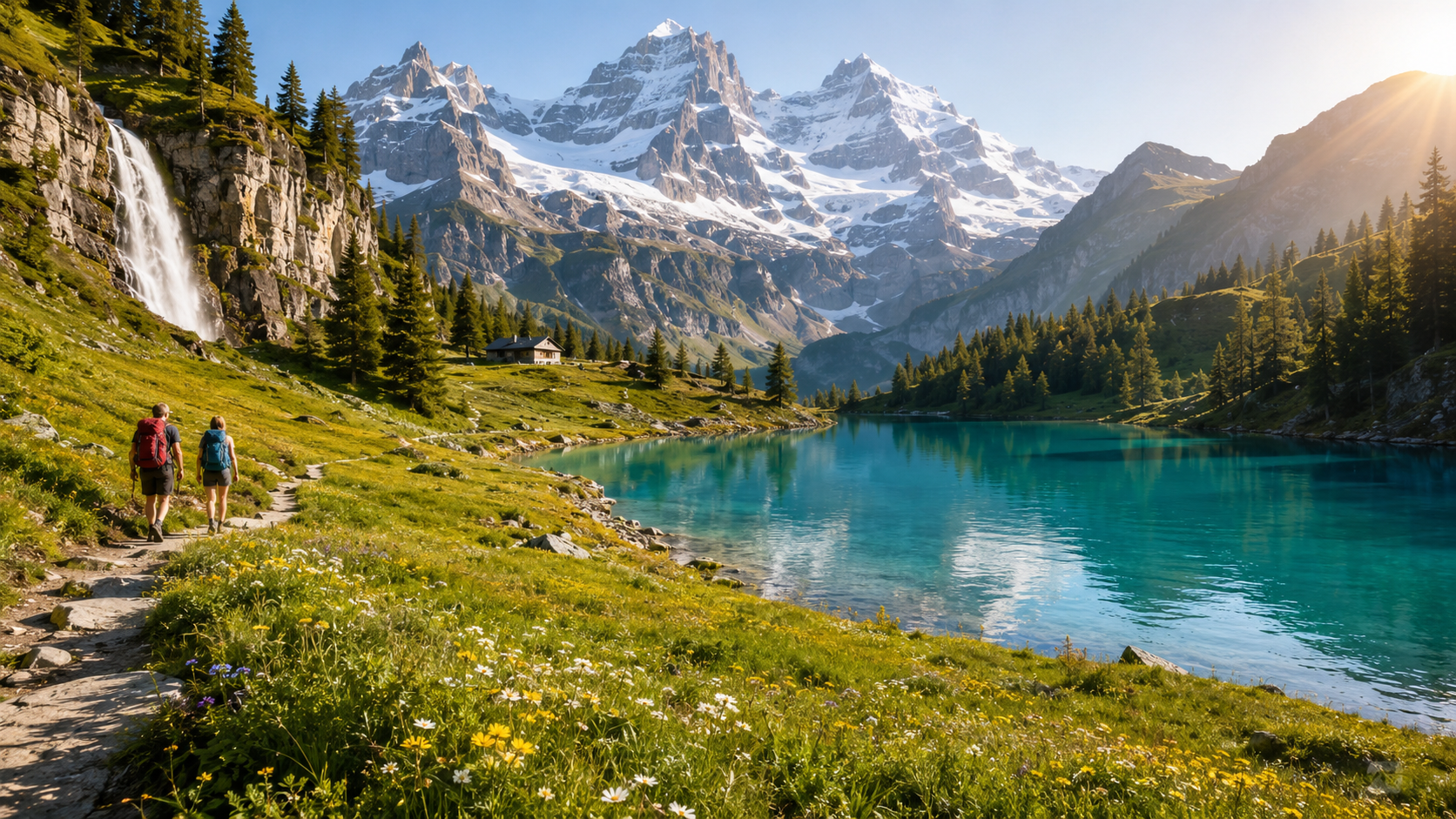
The village of Kandersteg in the Bernese Oberland serves as the entry point to Lake Oeschinen. Fed by glacial streams from the high Bluemlisalp peaks, this body of water is frequently called one of the most beautiful lakes in Europe. Visiting this cold mountain lake makes Kandersteg one of the Best Places to Experience Switzerland’s Great Outdoors.
Visitors reach the water by taking a modern gondola followed by a brief walk through a quiet pine forest. Stronger hikers can head up the loop path that climbs high above the north shore, looking down at the turquoise water. During summer, rowboats are available for rent, and brave swimmers can jump into the icy mountain waters.
Comparing Switzerland’s Premier Outdoor Regions
Selecting the right area to explore is simpler when comparing the key features of each mountain region. This overview highlights what makes each location unique for hikers.
| Region | Key Highlight | Best For | Difficulty Level |
|---|---|---|---|
| Jungfrau Region | Eiger Trail and Lauterbrunnen Waterfalls | Classic Alpine Scenery | Easy to Challenging |
| Zermatt | Matterhorn Views and Gorner Glacier | High-Altitude Trekking | Moderate to Challenging |
| Swiss National Park | Untamed Wilderness and Wildlife | Nature Preservation and Solitude | Moderate |
| Appenzell | Alpstein Massif and Aescher Cliff | Traditional Culture and Steep Ridges | Moderate to Challenging |
| Kandersteg | Lake Oeschinen | Alpine Lakes and Family Hikes | Easy to Moderate |
Planning Your Alpine Adventure in 2026
Deciding on the Best Places to Experience Switzerland’s Great Outdoors depends on your physical fitness and the time of year. High trails in Zermatt and the Jungfrau area usually open up from late June through October once the snow melts. Spring and autumn work well for lower hikes in the Appenzell hills and valleys of eastern Switzerland.
The Swiss train system links major hubs to remote trailheads, making travel simple with a single transit pass. Mountain weather changes rapidly even in the peak of summer. Checking local trail updates and wind forecasts before heading above two thousand meters is always a wise choice.
- Pack layers: Temperatures drop quickly as you climb, requiring windproof and waterproof jackets.
- Carry topographic maps: Offline phone maps work well, but paper maps remain a reliable backup.
- Start early: Mountain storms often gather in the afternoon, making morning departures much safer.
Final Takeaways for Your Swiss Journey
To enjoy the mountain wilderness fully, focus on a few select spots instead of rushing across the whole country. Staying in central towns like Grindelwald or Zermatt reduces travel time and keeps you on the trail longer. Structuring your route around the Best Places to Experience Switzerland’s Great Outdoors leads to an unforgettable mountain trip.


Comments are closed