




 Brunches in Switzerland
Swiss Cuisine Guide: From Cheese Fondue to Chocolate
Switzerland has a deeply rooted food culture shaped by harsh mountain winters and diverse regional languages. This guide digs into the classic meals, history, and preparation methods that shape the culinary identity of this mountainous nation. To truly understand the culture of the Alpine nation, one must dive into a comprehensive Swiss Cuisine Guide: From Cheese Fondue to Chocolate.
For centuries, the rugged Swiss landscape cut off mountain communities, forcing them to survive on preserved dairy products and resilient grains. This seclusion nurtured distinct local cooking habits that eventually blended into a shared culinary heritage. Today, Swiss dining merges simple, heavy peasant fare with highly refined cooking styles.
The Foundation of Alpine Flavors
The bedrock of Swiss cooking lies in the incredible quality of local dairy. During short summer seasons, cows graze on diverse high-altitude herbs and grasses, yielding milk with deep, layered flavors. This Swiss Cuisine Guide: From Cheese Fondue to Chocolate highlights how geographical isolation shaped early dairy preservation methods.
Aged cheeses and dried meats kept isolated families fed through long, bitter winters when fresh food was scarce. What started as survival tactics slowly evolved into revered traditions that still rule the Swiss dinner table. Grasping these deep farming roots makes every bite taste much more meaningful.
The Sacred Ritual of Swiss Cheese
Cheese is the undisputed ruler of the Swiss table, with over 450 varieties crafted across the country. Eating fondue or raclette is far more than a simple meal; it represents a social ritual that gathers friends and family around a shared hearth. As you navigate this Swiss Cuisine Guide: From Cheese Fondue to Chocolate, you will discover that rustic potato dishes hold equal cultural weight.
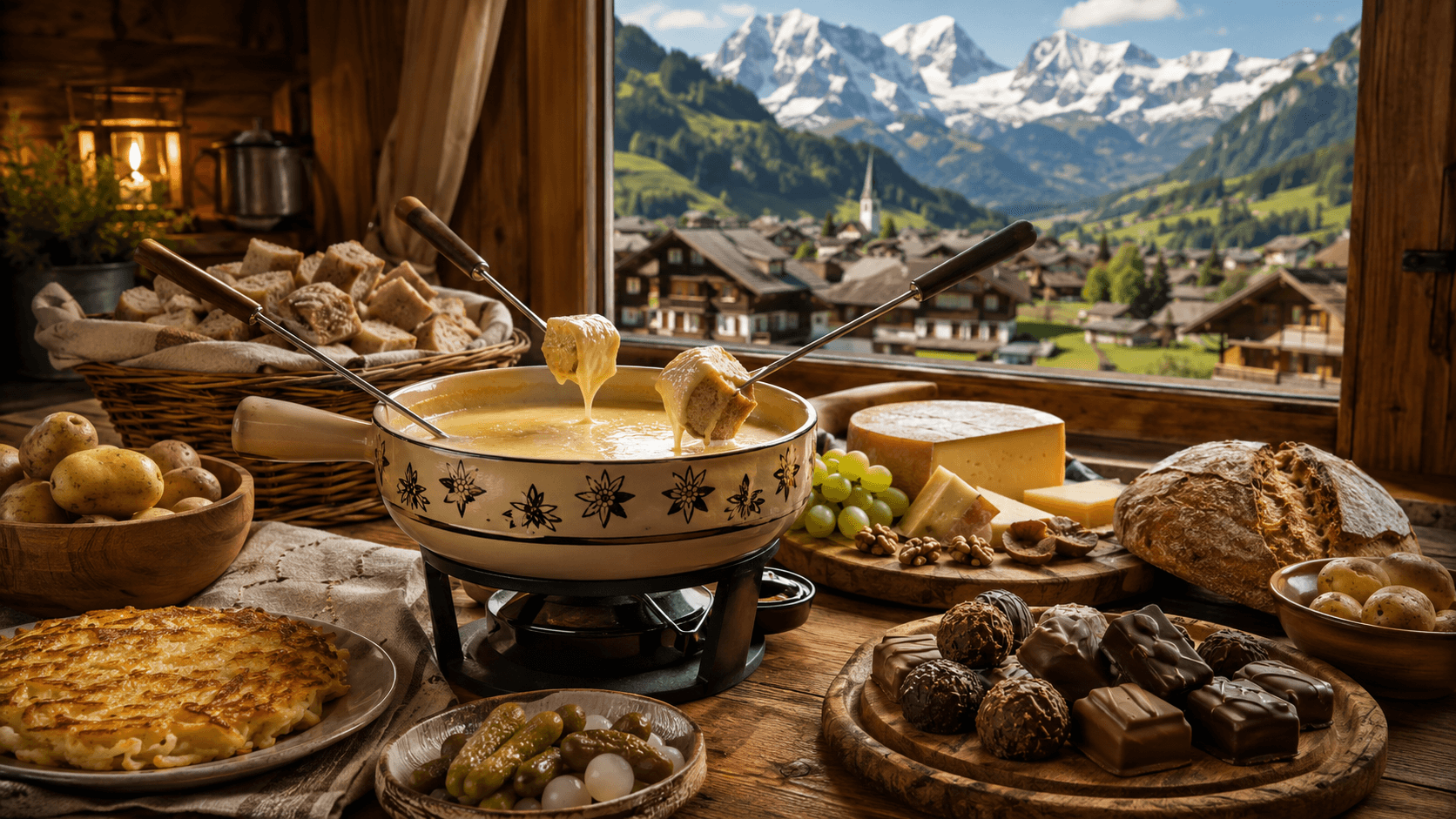
A proper Swiss fondue relies on a specific blend of cheeses, usually combining sharp Gruyère with creamy Vacherin Fribourgeois. This mix is melted gently with dry white wine, garlic, and a touch of starch to keep the liquid smooth. Hungry guests use long, slender forks to plunge crusty bread cubes directly into the bubbling pot.
To eat fondue like a local, you should follow a few old, unwritten rules. These simple customs keep the cheese perfectly mixed and show respect for the heritage behind the meal.
- Stir the pot in a figure-eight motion to prevent the melted cheese from separating.
- Never double-dip your bread to keep the shared pot clean for everyone.
- Drink dry white wine or warm black tea instead of cold water to help your stomach digest the heavy meal.
| Cheese Variety | Region of Origin | Flavor Profile |
|---|---|---|
| Gruyère AOP | Canton of Fribourg | Nutty, deep, and slightly sweet as it matures |
| Appenzeller | Appenzell Region | Spicy, herbal, and strongly aromatic |
| Tête de Moine | Bernese Jura | Sharp, bold, served as beautiful shaved rosettes |
Beyond Cheese: Hearty Alpine Staples
Swiss food goes far beyond melted cheese, featuring heavy ingredients meant to fuel hard work in high altitudes. Rösti, a simple dish of pan-fried shredded potatoes, began as a morning meal for farmers in the canton of Bern. Today, people across every language region claim it as a beloved national dish.
A perfect Rösti has a crunchy, golden crust on the outside while staying soft and tender inside. Locals often serve it alongside Zürcher Geschnetzeltes, a dish of thinly sliced veal cooked in a rich mushroom and white wine cream sauce. This pairing is widely loved as the ultimate Swiss comfort food.
- Use high-starch potatoes so the shredded pieces stick together in the pan.
- Fry with clarified butter or lard to get that beautiful, crispy golden exterior.
- Season lightly with coarse salt and a pinch of ground nutmeg.
The Sophistication of Swiss Chocolate
Swiss chocolate makers completely changed the global sweet trade during the nineteenth century with clever new production methods. No Swiss Cuisine Guide: From Cheese Fondue to Chocolate would be complete without exploring the meticulous science of conching. This process, invented by Rodolphe Lindt in 1879, uses non-stop stirring to create an incredibly smooth texture.
Before this breakthrough, chocolate was crumbly, gritty, and hard to shape into solid blocks. When Daniel Peter added condensed milk in 1875, it paved the way for modern, creamy milk chocolate. These steps secured the country’s spot as the world leader in luxury chocolate making.
- François-Louis Cailler opened the first machine-powered chocolate factory in Vevey in 1819.
- Daniel Peter made the first milk chocolate in 1875 by mixing cocoa with condensed milk.
- Rodolphe Lindt built the conching machine in 1879 to smooth out the texture of cocoa.
Regional Gastronomy and Drinking Traditions
Looking at local differences is a key part of understanding the culinary landscape. The French-speaking western cantons prefer rich cream sauces, delicate pastries, and fresh lake fish like perch. Meanwhile, German-speaking areas lean heavily toward thick sausages, potato dishes, and dense stews.
Down south, the Italian-speaking canton of Ticino serves up a different menu filled with polenta, rich risottos, and cured meats. Because the landscape is so varied, traveling over a single mountain pass can bring you to a completely different set of local foods.
A thorough Swiss Cuisine Guide: From Cheese Fondue to Chocolate also demands an examination of traditional pairings. Crisp local Chasselas wine pairs beautifully with heavy cheese because of its refreshing mineral notes and balanced acidity. To end the meal, a small glass of Kirsch, a clear cherry brandy, goes wonderfully with dark chocolate or fruit tarts.
Practical Tips for Experiencing Swiss Gastronomy
To enjoy the local food scene, you need to know how restaurants run their daily schedules. Most classic spots serve lunch strictly between noon and two in the afternoon. Evening service usually starts around six and winds down by ten at night.
Eating out in Switzerland gets expensive quickly, but checking out neighborhood bakeries and open-air markets keeps costs down. Seeking out high-altitude mountain huts, called cabanes or Hütten, rewards hikers with simple, rustic meals made from hyper-local ingredients.
Conclusion
Using this Swiss Cuisine Guide: From Cheese Fondue to Chocolate as your culinary roadmap ensures a deep appreciation for these time-honored traditions. Swiss cooking shows human creativity in a tough landscape, turning basic ingredients into highly prized delicacies.
To get the most out of your culinary journey, keep these simple tips in mind.
- Look for local specialties to taste the distinct regional influences.
- Choose high-quality alpine dairy and handmade cheeses from small producers.
- Visit historic sweet shops to taste the legacy of early chocolate makers.
Traveling through the Swiss food world is an unforgettable adventure for the senses. Let this Swiss Cuisine Guide: From Cheese Fondue to Chocolate inspire your next culinary travel itinerary.


Comments are closed